
Search surface
23B+
Monthly PC searches across Microsoft Advertising
March 2025 comScore figures cited by Microsoft put the search network above 23 billion monthly PC searches worldwide.
 Bing Ads for iGaming Operators
Search-first Bing Ads execution for casino and sportsbook operators.
We use Bing Ads and the broader Microsoft Advertising Network to capture incremental high-intent search demand beyond Google, with gambling approval, UET-based value tracking, Search/PMax/Audience layering, and weekly query control tied to FTDs, deposits, and ROAS.
Incremental search coverage: we use Bing Ads and Microsoft Advertising to extend profitable search beyond Google-only setups instead of treating Bing as a low-governance budget dump for desktop-heavy, workday search demand.
Approval-first market expansion: licensed market scope, landing-path compliance, market approval forms, local regulatory constraints, and Microsoft gambling approval are checked before keyword expansion, not after disapprovals start.
Microsoft-native execution: UET, Google Import, Audience targeting, impression-based remarketing, DSA, Multimedia Ads, and PMax are used deliberately and only when the search engine is already healthy and profitable.
Value-led optimization: bidding models are trained on FTDs, deposits, GEO value, qualified player thresholds by market, and offline feedback loops so automation scales the right players instead of shallow registration volume.
Search surface
23B+
Monthly PC searches across Microsoft Advertising
March 2025 comScore figures cited by Microsoft put the search network above 23 billion monthly PC searches worldwide.
Audience scale
785M+
Monthly PC searchers in 187 markets worldwide
Microsoft puts that reach at 785 million monthly PC searchers, enough scale to matter once Google Search is mature.
Desktop share
10.71%
Bing worldwide desktop search share estimate
Statcounter's February 2026 desktop data put Bing at 10.71% worldwide, supporting the case for incremental intent.
US desktop share
16.66%
Bing U.S. desktop search share estimate today
Statcounter's February 2026 U.S. desktop data puts Bing at 16.66%, with the U.K. still in double digits on Statcounter.
Platform and market context, not a promise of account performance.
Microsoft-first
Microsoft Ads is not a side project. It is where we extend profitable search beyond Google-only setups when the operator already understands the value of search intent and wants more approved coverage.
The right Microsoft pitch for regulated operators is incremental, efficient search coverage. We use it to capture high-intent demand that Google does not fully own, especially when desktop-heavy behavior, workday research, or partner-network reach can add qualified search volume without relaxing efficiency rules.
Smaller volume makes query discipline more important, not less.
That is the core difference between a real Microsoft Ads program and a recycled Google import. We protect intent quality first, then use Microsoft-native layers to expand coverage deliberately.
PPCJuice has run live operator PPC across multiple casino and sportsbook brands, so this page is grounded in operator acquisition logic, not generic SaaS search playbooks. More context sits on About PPCJuice.
We keep Microsoft Search first. Audience, Display, Multimedia, and PMax are expansion layers only when the query engine, approval scope, and tracking signals are already clean.
We do not sell Bing on haunted-parrot CPC clichés. The stronger pitch is incremental intent, platform-specific controls, and value-led measurement in regulated markets.
Because Microsoft volume is smaller than Google, weak search terms, loose partner settings, or shallow conversions distort performance faster. We use query mining, approval-safe landing paths, and UET/offline value feedback so Bing earns budget beside Google instead of hiding inside blended reporting.
Import is a launch shortcut, not a strategy. We use Google Import when it saves time, then rebuild around Microsoft partner behavior, approval scope, and UET signals so the account reflects Microsoft auction economics instead of recycled Google assumptions.
Brand proof
Recognizable brands matter because regulated Microsoft Ads execution is easier to claim than prove. The work below is grounded in live operator experience across operator accounts.












Compliance
Weak agency pages talk about lower CPCs. Strong ones understand that Microsoft gambling expansion starts with market eligibility, licensing, and approval scope before budget, match type, or automation gets a vote.
On Microsoft, gambling compliance sits inside campaign decisions, not just inside the approval workflow.
Microsoft's Advertising Agreement makes the ownership model explicit: advertisers are responsible for targeting, destinations, and the products promoted there. That pushes work into governance, review discipline, and market-safe account structure rather than paperwork alone.
Microsoft's gambling rules are usable because they are specific. We structure campaigns around that specificity so licensed-market scale does not get derailed by avoidable approval mistakes.
Belgium
The same June 2023 update said gambling advertising would no longer be allowed in Belgium. That makes Belgium a hard scope boundary, not a bidding decision.
Netherlands
Microsoft's June 2023 policy update made the Netherlands rule explicit: gambling advertisers need to target only users over 24.
Ireland
The update says Ireland campaigns need time targeting so gambling ads do not serve between 5:30 AM and 9:00 PM when that rule applies.
Application changes
If targeting, license, or other application information changes, Microsoft requires a fresh approval submission rather than assuming the old scope carries forward.
Unlisted markets
Microsoft's participation form makes the scope rule plain: if a target market is not listed, gambling is not allowed there under current policy.
We proudly hold Microsoft Advertising Partner status, a recognition that supports our paid search work beyond Google-only execution. It is proof that PPCJuice treats Bing Ads as a serious operator channel, not a sidecar import.
Microsoft recognizes PPCJuice through its partner program, showing that our work covers Bing Ads and Microsoft Advertising with platform-specific execution.
Search-first
Microsoft Search is the clearest place to capture high-intent acquisition because users are telling you what they want. The discipline is similar to our thinking across Google Ads for Casinos and Sportsbook PPC Acquisition, but the execution is Microsoft-native.
Generic discovery, offer-fit intent, urgent commercial demand, brand leakage, competitor comparison, and GEO-specific modifiers do not carry the same deposit probability. We separate them before spend moves.
That filtering logic appears in our high-intent keyword blueprint and live odds PPC strategy. Different platform, same standard: query quality before budget expansion.
best online casino / sports betting sites
Used to map market vocabulary and see whether Microsoft is bringing serious operator-shopping demand or broad research traffic that should be filtered.
casino welcome bonus / bet builder app
Where the ad, promo framing, and landing path need to line up with the exact offer, product, and market rules or post-click quality breaks fast.
instant withdrawal casino / bet on live football now
High-pressure terms where withdrawal trust, payment methods, local eligibility, and fast UX usually decide whether intent turns into first deposits.
own-brand / brand + bonus / brand + app
Used to stop promo leakage, protect navigational demand, and keep Microsoft's automation from learning the wrong lessons from blended brand traffic.
brand alternatives / brand review / vs terms
Useful only when destination relevance, approval scope, and promo positioning are clean enough to convert rather than just buy curiosity clicks.
local language / withdrawal / payment / app / safe / licensed
The layer that usually separates vague traffic from deposit probability because it reveals what the player actually needs to feel comfortable acting now.
MICROSOFTSearch Controls
We use the Microsoft features that actually matter on Microsoft: strong RSA coverage, DSA for long-tail discovery, Multimedia for visual search real estate, and strict negative discipline so smaller volume does not get wasted.
RSA headline and description depth
Microsoft Search ads support 15 headlines and 4 descriptions, keeping ad testing strong for intent-specific coverage.
ixigo conversions from DSA
The ixigo case study says Dynamic Search Ads drove 44% of total conversions while improving ROAS by 10%.
ROAS lift example for Multimedia Ads
Microsoft cites higher ROAS and conversion output than standard text ads, with one Multimedia Ad per search page.
Microsoft-reported examples here are directional platform proof, not iGaming-specific guarantees.
PPCJuice has 10+ years on live casino and sportsbook accounts. On the right setups, Bing Ads and Search can produce strong early ROAS when campaigns are built around deposit intent, cleaner traffic, tighter approval scope, and value-led bidding instead of low-value conversions.
Launch logic
Microsoft makes it easy to import from Google, and that is useful. The mistake is confusing easy launch with finished strategy. We import to move faster, then rebuild around Microsoft auction and partner economics.
Microsoft Import Tools let campaigns import from Google with bids and budgets. The February 2025 Google Import update says imports can carry over Performance Max assets, audience signals, and search themes. Useful for speed. Not enough for profit on its own.
The real work begins after import: query discipline, market approval, UET accuracy, audience layering, negative keyword governance, and value-led bidding. That is where Microsoft Ads becomes commercially distinct from a copied Google account.
MICROSOFTBidding
Automated bidding on Microsoft works in real time at auction level. That only helps when the conversion signal reflects player value instead of vanity events.
Microsoft's automated-bidding overview frames the system as real-time, data-driven, and auction-level, supporting Maximize Conversions, Target CPA (tCPA), Maximize Conversion Value, Target ROAS (tROAS), and portfolio bid strategies. The March 17, 2026 update clarified campaigns put tCPA inside Maximize Conversions and tROAS inside Maximize Conversion Value while portfolio bid strategies remain unchanged.
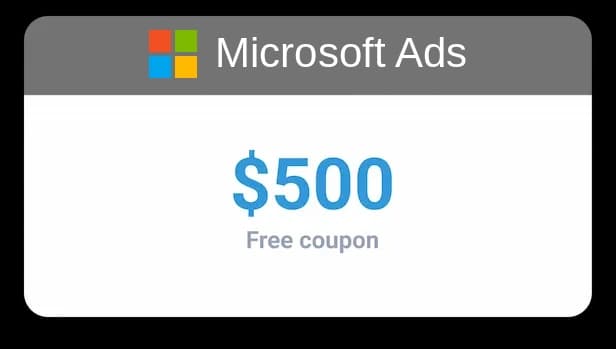
Microsoft's current promotional offer says eligible new Microsoft Advertising customers in the United States can qualify for up to $500 in ad credit after the spend threshold. That can help fund Search testing while tracking, landing paths, and first conversion signals are validated.
Microsoft says the offer expires June 30, 2026, applies only to new customers in the United States, and is limited to one offer. See Microsoft's offer details.
Measurement moat
Microsoft Ads measurement starts with clean UET, then grows into offline value, enhanced conversions, and bidding logic that can actually distinguish a good player from a cheap lead. That work sits next to our Google Analytics setups rather than outside them.
MICROSOFTAudience Lift
Microsoft has a real audience story, but the commercial use case is reinforcement: better search coverage, better re-engagement, and more trustworthy cross-channel lift.
For operator accounts, the real question is whether those layers create incremental brand searches, stronger return visits, and better-informed remarketing pools that make Search more efficient, not just more impressions across the Microsoft Audience Network.
Higher average CVR with audience targeting layered
Microsoft reports a 50% higher conversion rate on average when any type of audience targeting is in play.
More site visits from Search + Audience exposure
Microsoft's cross-network search-intent research found Search and Audience exposure drove 2.6x more site visits.
More conversions from Search + Audience exposure
Microsoft research says users exposed to both Search and Audience converted 6.6x more than search-only exposure.
Microsoft-reported lifts here are platform averages, not operator guarantees.
Book a complimentary strategy call and see where PPC execution could improve performance, tighten control, protect margin, speed up decision-making, cut wasted spend, and make the right support scope clear for your setup across brands, channels, and markets.
Expansion
Search-first does not mean search-only forever. It means expansion happens in the right order: approval scope, query control, measurement, then scalable reinforcement layers by channel.
When Microsoft needs to support a wider acquisition system, it usually complements YouTube Ads for demand shaping, App Store Ads for iOS conversion paths, and Google Play Ads for Android handoff. Those channels can widen the acquisition system, but they do not replace the need for a clean search-first engine.
MICROSOFTIncremental Lift
Pandora shows what Audience plus Search can do together. Flight Centre shows what PMax can do when Search themes, audience signals, and proven assets are already in place.
Incremental Search return per $1 on Audience ads
Microsoft's November 2025 Pandora case study found each $1 invested in Audience ads drove $1.50 return through Search.
More conversions in Flight Centre's PMax versus Search
Microsoft's Flight Centre study found 84% higher conversions and 36% better ROAS versus Search.
Potential Display and Native reach
Microsoft's Display and Native materials put reach at 1 billion customers, with 500M+ monthly readers on Microsoft properties.
The same broader channel logic applies to service mix. A mature Google Ads setup still does most of the heavy lifting on search volume, while Microsoft adds incremental coverage and cleaner desktop reach once the measurement layer is strong enough to compare channels honestly.
Testimonials
Working with Alex felt like having a performance partner who owned results. He brought structure and momentum to PPC optimisation and reporting across multiple brands and significant monthly spend - always focused on what moved CPA/ROAS.
Head of Digital Marketing, ComeOn Group

Alex was a reliable PPC partner for us across Betinia, YoYo Casino, CampoBet, and QuickCasino. He helped launch new brands and PPC strategies, kept optimisation moving with clear weekly performance updates, and was always easy to work with.
Director of Media, Medier Agency
Alex was a steady, commercial PPC partner for Winlandia. He brought clarity to our priorities, improved performance through smart testing, and kept reporting and next steps simple and actionable. Great pace, strong ownership, and easy to work with.
Head of Affiliates, Winlandia
If you're looking for support beyond Google Ads, we'd gladly point you toward Eda, Yasmine, and Christoffer. Eda now runs her own digital consultancy focused on SEO, social media, and programmatic advertising. Yasmine is now at Medier Agency bringing steady media leadership there, and Christoffer advises iGaming brands on affiliate growth, market expansion, and performance strategy.
Pricing
Book a complimentary strategy call and get a clear view of how your PPC is performing, where the best opportunities sit, and what the right scope looks like for your setup.
Quoted after account depth, brand count, and channel coverage.
Audit fee can be credited toward ongoing management within 30 days.
Quoted after brands, markets, channels, and execution scope.
Work with a senior PPC team with 10+ years of iGaming experience.
Use this to share internally/procurement.
FAQ
Straight answers on approval scope, import strategy, UET, bidding, and where Microsoft fits with Google. If your setup is more specific, contact PPCJuice.
Because Microsoft Search can add incremental high-intent coverage that Google does not fully own, especially on desktop-heavy and workday-heavy surfaces. The pitch is not 'Bing is cheaper.' The pitch is more approved search coverage with its own audience and measurement levers.
Yes. Google Import is the fastest way to launch, but we treat it as a starting structure, not a finished strategy. Imported campaigns still need Microsoft-specific approval checks, negative strategy, UET validation, query review, and value-led bidding.
Yes. Microsoft requires gambling advertisers to be approved and to submit a separate form for each market they want to target. If the market is not listed in the form, gambling ads are not allowed there under current policy.
FTDs, deposits, weighted GEO value by market, and downstream player quality signals. Registrations can be useful as a diagnostic, but they are too weak to be the main optimization target when operator economics are the real constraint.
After Search structure, approval scope, and UET are reliable. Search stays primary. Audience targeting, remarketing, Multimedia Ads, Display, and PMax are reinforcement or expansion layers once the account is already teaching Microsoft the right commercial truth.
Yes. Microsoft Ads rarely succeeds in isolation, so we also support measurement architecture, Google Analytics setups, YouTube, app growth surfaces, and cross-channel budget logic where those channels strengthen the economics.
You’re not hiring a generic agency — you’re getting a proven iGaming Microsoft Ads team with 10+ years on operator accounts. We move fast, cut waste hard, and scale what pays back — with clear weekly decisions tied to CPA, FTDs, and deposits.